Enchanted scents of an earthy mint is what you will find when you crush the feathery leaves of the Mugwort plant. This plant is one of my first allies and a very common one to find in mine and many other parts of the world.
Table of Contents
- DISTRIBUTION
- IDENTIFICATION
- CULINARY APPLICATIONS
- MEDICINAL APPLICATIONS
- WARNINGS
- SPIRITUAL APPLICATIONS
- MYTHOLOGICAL LORE
- REFERENCES:
DISTRIBUTION
This plant if thought to have originated in Europe/Asia or Eurasia. From there it has spread itself across the world backpacking off the travels of humans and animals alike. It is now found throughout temperate regions of North and South America, in addition to North Africa.
In these regions it is typically found in open sunny areas at low altitudes. Usually on the edge of a forest or plain. Common to find growing out of disturbed soils of roadsides, empty lots and the like. This habitat pattern is what has led some to consider it an “invasive weed”. Another way to think of it is that it is a pioneer plant, tough, and able to grow in the most adverse conditions to reach a lending hand to humans scattered within urban environments.
“The ability [of mugwort] to survive in contrasting temperature and moisture
environments, allows this [“]weed[“] to thrive equally well along
cool dry roadsides in Québec and warm moist floodplains in
the Southern United States.” – Barney JN, DiTomasso A
IDENTIFICATION
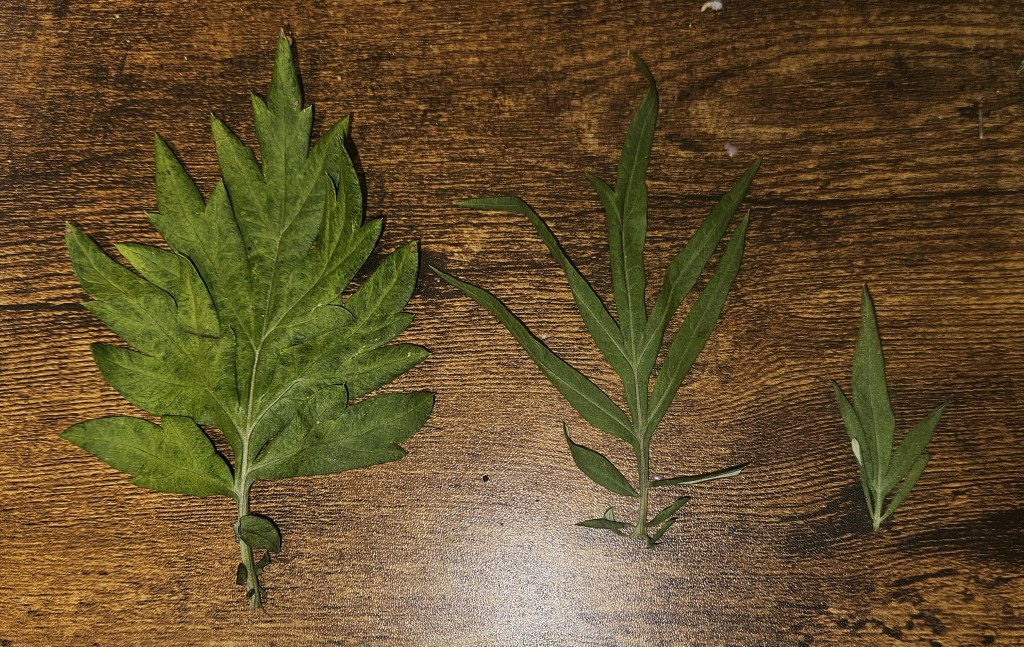
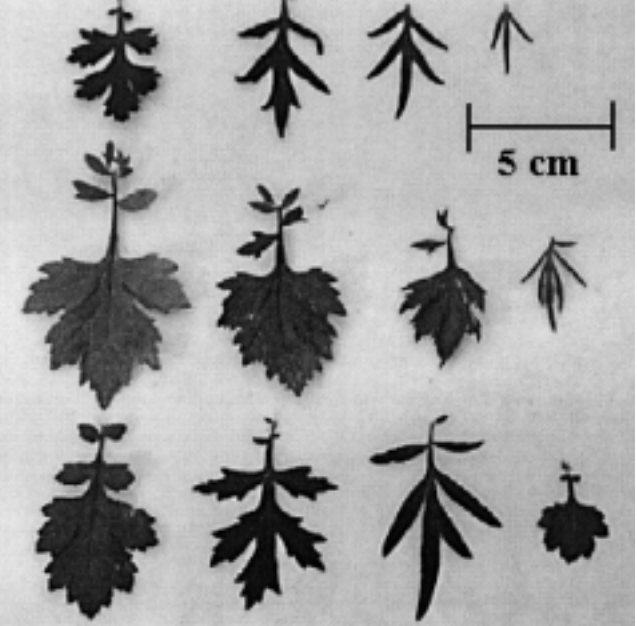
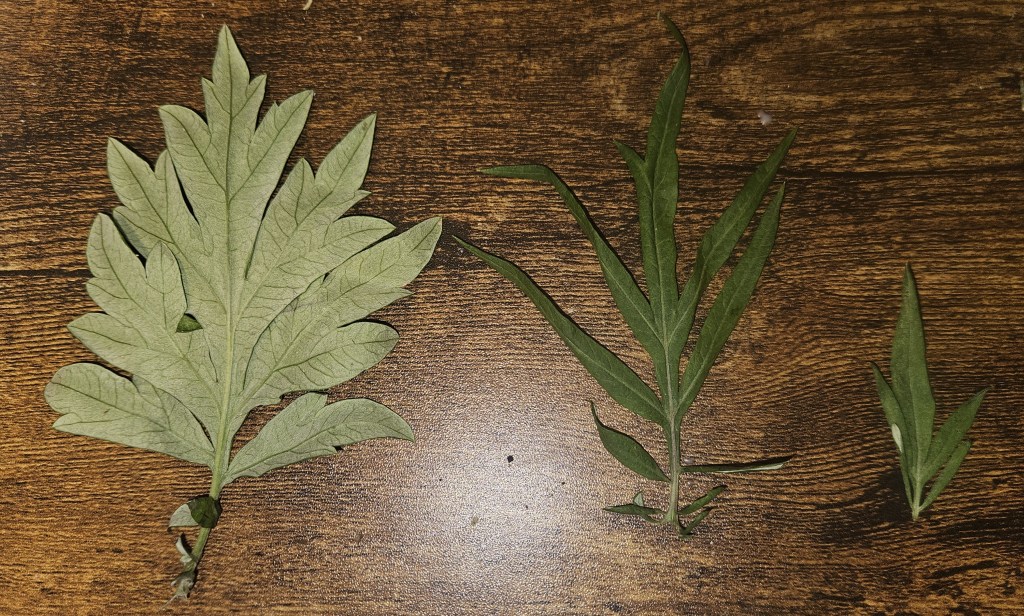
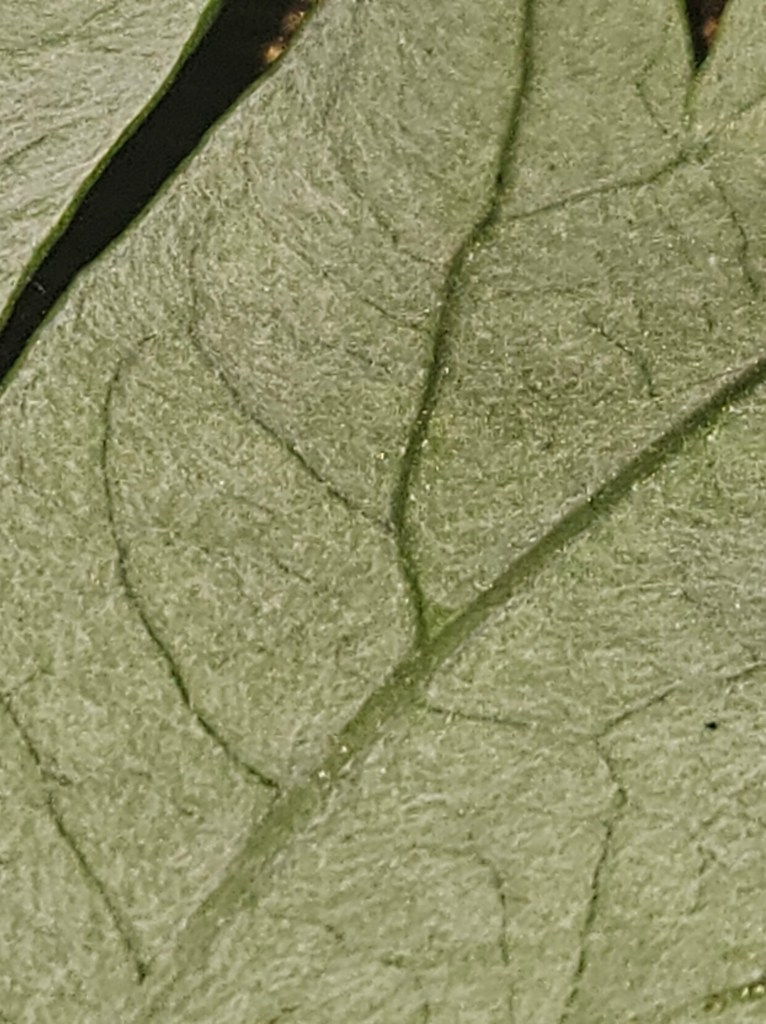
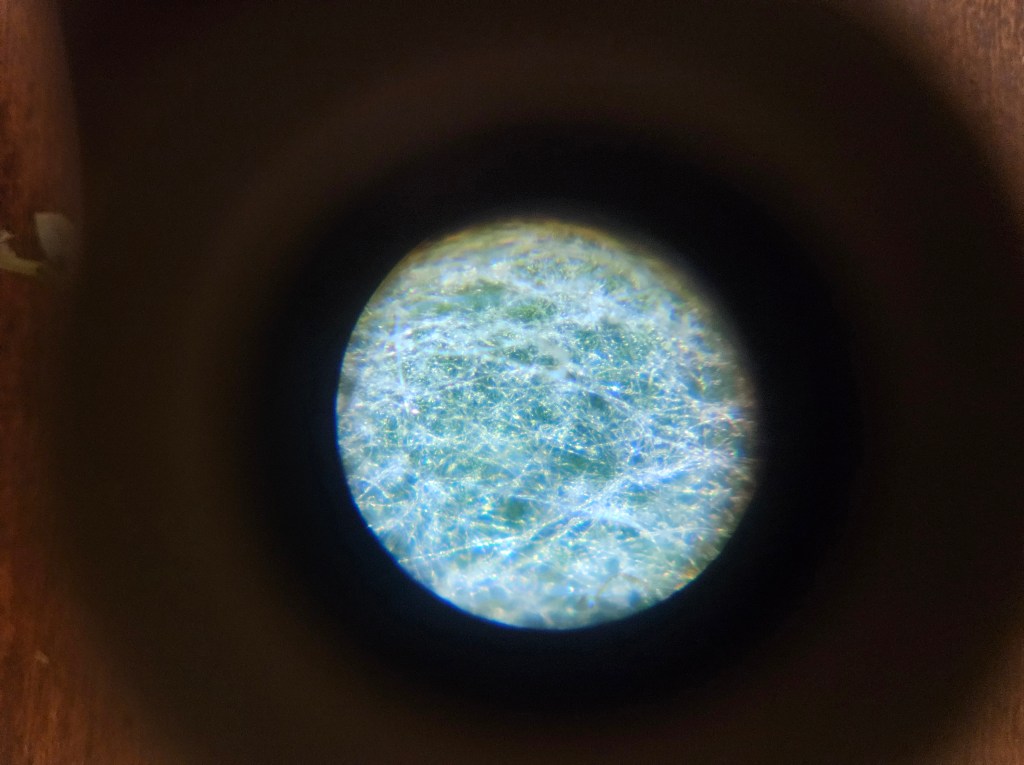
Once you learn this plant, it is hard to miss it and you will begin to see it everywhere.
CULINARY APPLICATIONS
Can be eaten raw or cooked. However, it has a strong taste and may be better off as a herb to flavor your dish rather than the main event of a salad bowl.
Young shoots can be cooked and enjoyed.
May also be used as a flavoring in beer to replace or supplement hops.
MEDICINAL APPLICATIONS
It can be administered in almost any way you see fit. Tea, tincture, oil, or smoke. I have never heard of – nor tried – a vinegar, honey, or oxymel preparation of Mugwort. If you do, please let me know how it goes.
The smoke has been traditionally used in Chinese Medicine in moxibustion. Please note that the one used in TCM is a different species of Mugwort known as, Artemisia argyi or verlotiorum (“Chinese Mugwort”). It is typically sold in a box of smudge sticks, the powdered herb is tightly bound in burning paper.
In this application it is used to relieve the pain of musculoskeletal injuries and speed up recovery time by bringing increased blood flow to the area of application. It is not the smoke per se that is responsible for this effect but the specific spectrum of light that is emitted by the burning herb that crosses into the ultraviolet spectrum. It is usually applied to key points along the meridian system to promote movement of chi through these channels.
It can be smoked like a cigarette, combined with tobaccos or cannabis it can make a fine smoke, imparting a trance-like quality to cannabinoid effects. It was once upon a time commonly referred to as “Sailor’s Tobacco.” Probably due to the fact that it grows wildly near ports where disturbed soils and full sunlight are common.
Obstetrics & Gynecology –
In almost every source you look into for information on Mugwort’s medicinal applications you will always find it’s use for either menstrual or pregnancy issues. As far back as we can go in recorded history, this has always been a medicinal application of the herb. It has been used this way as far back as ancient Egypt and continued along through the civilizations of ancient Greece and Rome. In fact, the genus name of Artemisia is thought to have originated from its venerated state among the priestesses of Artemis, patron of pregnant women and newly delivered mothers.
It is believed to balance reproductive hormones and through its activity as an anti-spasmodic it can relieve menstrual cramping and excessive bleeding. It is reported to bring on menses as well. I can see this working if the lack of menses is due to a tense tissue state. However, I do not have any personal experience applying the plant in this way. A different source states how this plant is used in European folk medicine to “induce labor and miscarriages[4].”
Applied along the lines of allopathic thought and receptor pharmacology, these statements are inconsistent at first glance, since labor induction is a result of uterine contraction but the plant is classified as “anti-spasmodic.” I would however say that, a uterine contraction that results in descent of the baby and progression of labor is a smooth and coordinated muscular contraction starting from the top of the uterus and squeezing down. Spasms, in their most common sense, are not controlled at all. Maybe this plant helps coordinate the muscular contractions in a smoother fashion which can relieve cramping, in the cramping woman, but induce contractions in the pregnant one. It seems that there may be a more nuanced understanding of how this plant interacts with the female reproductive system. Maybe we can bring back the cults of Artemis and the old midwives for more info.
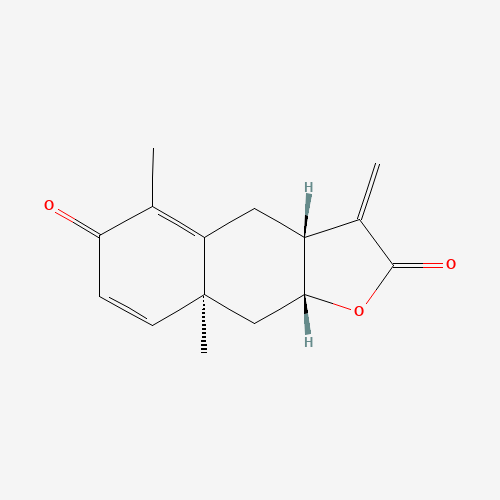
A group of researchers in Cardiff (UK) tested chloroform and methanol extracts prepared from the herb of Artemisia vulgaris for their activity toward biogenic amine receptors in the smooth muscles of the gastrointestinal tract and respiratory tract of guinea pigs. Both extracts had an antagonistic effect on the H1 receptors and caused the relaxation of smooth muscles. Two main compounds were isolated from the chloroform fraction – yomogin and 1,2,3,4-diepoxy-11(13)-eudesmen-12,8-olide – of which the former showed significant antagonism toward the H1 receptor.
The smoke is also used to move a baby from a breech position. Ask me how from a contemporary “scientific” perspective and I have no answer for you. When I first heard this it sounded crazy to me too. However upon further investigation I found that this is not just burning mugwort over the uterus or waving it around the gravid woman’s face. It is the application of the moxibustion stick of Mugwort to a specific Meridian point on the toe. This is done before labor begins and seems to not be meant for an emergent situation. A systemic review on up to 7RCT’s published in Cochrane Pregnancy and Childbirth Group in 2023 [7] reports that the use of moxibustion in this way significantly reduced the rate of breech presentation, use of external cephalic maneuvers, or use of oxytocin to induce labor. There was however, found to be a significantly increased risk of premature rupture of membranes. Take it a with a grain of salt, but it is interesting and worthy of follow up.
Gastrointestinal –
Commonly used to alleviate gastrointestinal discomfort. Application for a wide range of symptoms including: constipation, diarrhea, gas, bloating, and intestinal worms. In biochemical studies it has shown anti-helminthic activity against Trichinella spiralis, an intestinal worm commonly found in undercooked pork products.
Being that it is a bitter herb. The gustatory reflex facilitates stimulates the vagus nerve to secrete of bile and increase circulation to the gastrointestinal organs. This maintains liver health and aids in digestions.
Respiratory –
Mugwort has been shown to have biochemical activity on receptors of the bronchioles that mediate dilation of the airways. Specifically it exerts an anticholinergic effect in addition to triggering calcium efflux from the cytoplasm resulting in smooth muscle relaxation.
It also has an antagonistic effect on histamine H1 receptors of the respiratory airway. For asthmatics this may be beneficial since the activation of the histamine H1 receptors of the airways is a significant contributor to constriction of the airway.
It can be made into a leaf tea or the steam can be inhaled to help with bronchial inflammation.
Neuropsychiatric –
Mugwort is widely known for it’s application as a dream herb. Whether it has to do with quelling nightmares or asking for messages through the dreamscape, Mugwort is a close ally to have when navigating the subconscious realms of our psyche.
On a physiological level, the consumption of Mugwort can result in a state of calm alertness, balancing mood, quelling anxiety and helping set the mind ready for sleep. I heard a report from a person suffering with Bipolar Disorder that smoking Mugwort helps stabilize their mood a lot. This plant has been shown to have biochemical activity on the monoamine oxidase receptor, by inhibiting it, it results in increased levels of neurotransmitters such as dopamine and serotonin.
To improve sleep, Mugwort is recommended as a tea, tincture, or bath before bedtime. Stick it in your pillow or hang over your bed to promote vivid dreams.
In some epileptics it can help reduce the severity of and increase the time between seizures. Tea or tincture of the leaf works best.
Dermatologic –
As a poultice, the application of Mugwort to the skin can reduce the itchiness and inflammation from poison ivy, rashes, and burns. Grind fresh leaves into a paste and apply it to the affected area. You may also use the leaf tea or infused flower oil.
Anticellular –
Mugwort leaf tincture and oil has been shown to inhibit the growth of Staphylococcus aureus, Streptococcus, Bacillus spp., E. coli, Pseudomonas, Candida albicans, Salmonella enteritidis, Klebsiella pneumoniae, and Aspergillus niger. In its essential oil form Mugwort is particularly powerful in this application, mostly due to the compounds 1,8-cineole, α-thujone and camphene.
It can function as an anti-malarial with activity against Plasmodium yoelii and P. berghei.
As mentioned earlier it has anti-helminthic properties against Trichinella spiralis.
Lastly, it has shown to inhibit the growth of cancer cell lines: MCF7, HeLa, A7R5, 293T, HL-60 and SW-480.
Cardiovascular –
Hyperlipidemia, high blood pressure, and sedentary lifestyles have all combined to result in an epidemic of cardiovascular disease manifesting as blood vessel occlusion, a.k.a. strokes and heart attacks. Many plants, including Mugwort, have the ability to reduce lipids, reduce blood pressure, and clear out the oxidative damage of sedentary lifestyles and poor diet.
A systematic review in 2014 [8] showed that the use antihypertensive medications in addition to Mugwort as moxibustion applied to the meridian point K1 on the sole of the foot resulted in a significant decrease in systolic blood pressure versus antihypertensive medications alone.
Aqueous extracts of the roots have shown activity against numerous enzymes implicated in oxidative damage while also lowering total cholesterol, triglycerides, LDL, VLDL, and increasing HDL.
WARNINGS
Mugwort may be toxic in large doses. Some people have allergic reactions that manifest as skin rash. If you are administering to someone who has had allergic reactions to plants in the past, use with caution at small doses to see how they react first. When administering any drug to anyone, the rule of thumb should always be, slow and steady.
SPIRITUAL APPLICATIONS
In some traditions Mugwort is known as the Mother of All Herbs or The Original One, hence where the epithet of Una comes from. It is an herb that can serve as an initiatory guide into the spiritual world of plants as it is very responsive to most people who come to work with it.
Mugwort is very effective at moving stagnant energy. Hence its favored application as moxibustion upon meridian channels. You can tie a bundle together into a wand/brush to wipe/whip away stagnant or repugnant energy off a person, place, or thing.
Wuna has a special predilection for the spinal column. If you sit with her in deep meditation she will find a way to rest herself upon your spine or the base of your skull. This is where she exerts her power of integrity, gifting it to you, asking you to go out into the world with your spine held straight and high, the same way she grows.
Wuna is a gifter of songs and secrets.
Wuna is a gifter of dreams. Sometimes going so far as to have other people dream about you to bring you messages about yourself.
She is a great ally to have.
MYTHOLOGICAL LORE
The genus name Artemisia comes from the Greek goddess of The Hunt, Artemis.
Again we have this straight arrow motif.
She is a goddess of the wilderness and the moon. Mugwort exemplifies this with its wily shoots that grow almost anywhere and peak activity during full moons.
Moreover, Artemis was the patron deity to pregnant mothers. Here is where its ancient usage in obstetrical and gynecological complaints was employed and gave Mugwort one of its first common applications.
In plant medicine circles Mugwort is sometimes known as The Mother Of All Herbs or The First Herb, Una.
It is a good plant to get to know on an energetic-spiritual level, especially for beginners.
Author: Marcos Berrios Arredondo, M.D., Curandero, Malongo
REFERENCES:
- Mother Nature
- Personal Experience
- Apelian, N. ‘The Lost Book of Herbal Remedies: The Healing Power of Plant Medicine.’ 2021.
- Barney JN, DiTomasso A. The biology of Canadian weeds 118 Artemisia vulgaris L. Can. J. Plant Sci. 83(1); Jan 2003.
- Ekiert H, Pajor J, Klin P, Rzepiela A, Ślesak H, Szopa A. Significance of Artemisia Vulgaris L. (Common Mugwort) in the History of Medicine and Its Possible Contemporary Applications Substantiated by Phytochemical and Pharmacological Studies. Molecules. 25(19):4415; 2020 Sep 25. doi: 10.3390/molecules25194415. PMID: 32992959; PMCID: PMC7583039.
- Yomogin Chemical Structure. https://pubchem.ncbi.nlm.nih.gov/compound/174865#section=2D-Structure
- Coyle ME, Smith C, Peat B. Cephalic version by moxibustion for breech presentation. Cochrane Database Syst Rev. 2023 May 9;5(5):CD003928. doi: 10.1002/14651858.CD003928.pub4. PMID: 37158339; PMCID: PMC10167788.
- Yang, Xiaochen, Xiong, Xingjiang, Yang, Guoyan, Wang, Jie, Effectiveness of Stimulation of Acupoint KI 1 by Artemisia vulgaris (Moxa) for the Treatment of Essential Hypertension: A Systematic Review of Randomized Controlled Trials, Evidence-Based Complementary and Alternative Medicine, 2014, 187484, 7 pages, 2014. https://doi.org/10.1155/2014/187484
 The Medicine Way