I am a father who has a child with eczema. I am also a medical doctor, budding herbalist, and naturopath convert. I am obligated to tell you that this is not medical advice, because it’s not. This article is a compendium of my own medical knowledge, plant medicine research, and experience I have had treating a child with eczema. It is my own personal opinion, sprinkled with facts, evidence, and anecdotes. Take it for what it’s worth to you.
- Disease Description
- Western Medical Interventions
- Natural Medicine Perspective
- Update: 1/28/25
- References:
Disease Description
Eczema has become a catch all term for any manner of skin rash. However, it is a specific disease with particular characteristics. Eczema is a Greek word that means “to boil over”.
Eczema can be classified into four main categories:
- Allergic Contact Dermatitis: This refers to the form of eczema caused by a specific irritant that makes contact with the skin and causes an inflammatory reaction. The classic example of this is a reaction to poison ivy.
- Atopic Dermatitis: Atopic refers to “atopy” which is a state of increased allergic reaction characterized by skin rashes, asthma, and runny nose from allergies (allergic rhinitis).
- Drug-Related Eczematous Dermatitis: As the name implies, this is an eczema rash that develops as a result of some particular drug being introduced to the body. Examples of drugs implicated in this are certain antibiotics and anti-seizure medications.
- Photo-Eczematous Dermatitis: Caused by a reaction to certain wavelengths of light. These conditions are usually associated with some genetic defect of metabolism.
These four can be broadly classified into “internal” or “external” eczema. With this framework we can see how eczema is a reaction to something inside our body, i.e. foods, drugs, etc. Or something outside our body, i.e. light, detergents, creams, plants, etc.
The atopic dermatitis form of eczema seems to be the most annoying of all to treat. Reason being that nobody in the western medical system has been able to pinpoint exactly what is the causative agent for the rash. We know it has a genetic component, but that is all. This will be the form of eczema that we focus on in this article.
Atopic persons – people with the “triad” of eczema, asthma, and allergic rhinitis – are more likely to develop eczema than non-atopic persons. Certain people are described as being “atopic” due to their increased sensitivity to environmental allergens. There is a clear genetic predisposition to atopy. When both parents are atopic, the child has a >80% chance of also being atopic. When one parent is affected, the odds drop to approximately 50%.
This disease usually manifests within the first five years of life. Before the age of 1 year it is considered infantile eczema. After the age of 1 year it is considered childhood eczema. Each one has a distinctive pattern of distribution on the body. Infants that develop eczema usually have the rash appear first on face, neck, and extensor surfaces (back) of elbows. Children >1 year of age usually have the rash appear first on the flexor surfaces (bend) of elbows and knees.
About 20% of people with eczema develop it in adulthood. This presentation can vary in location, being localized to specific parts of the body, not necessarily the elbows or knees. Sometimes they manifest solely on the hands or any other part of the body. Our suspicion is that these forms of adult eczema are more so related to specific irritants in the environment or toxic accumulation from poor diet or lifestyle habits such as drinking alcohol.
The first rash (primary lesion) that appears are described as erythematous macules, papules, and vesicles. Basically, they are inflamed patches, bumps, or small pimple-like structures on the skin. The main characteristic is that they are very itchy (pruritic), which gets worse when the skin is dry.
After a person begins to scratch away, the primary lesion develops into what is described as a secondary lesion which is a result of the constant scratching. The rash now starts to take on more of a plaque-like appearance, i.e. the skin becomes darker (hyperpigmentation), and thicker (lichenification) than the rest of the skin around it.
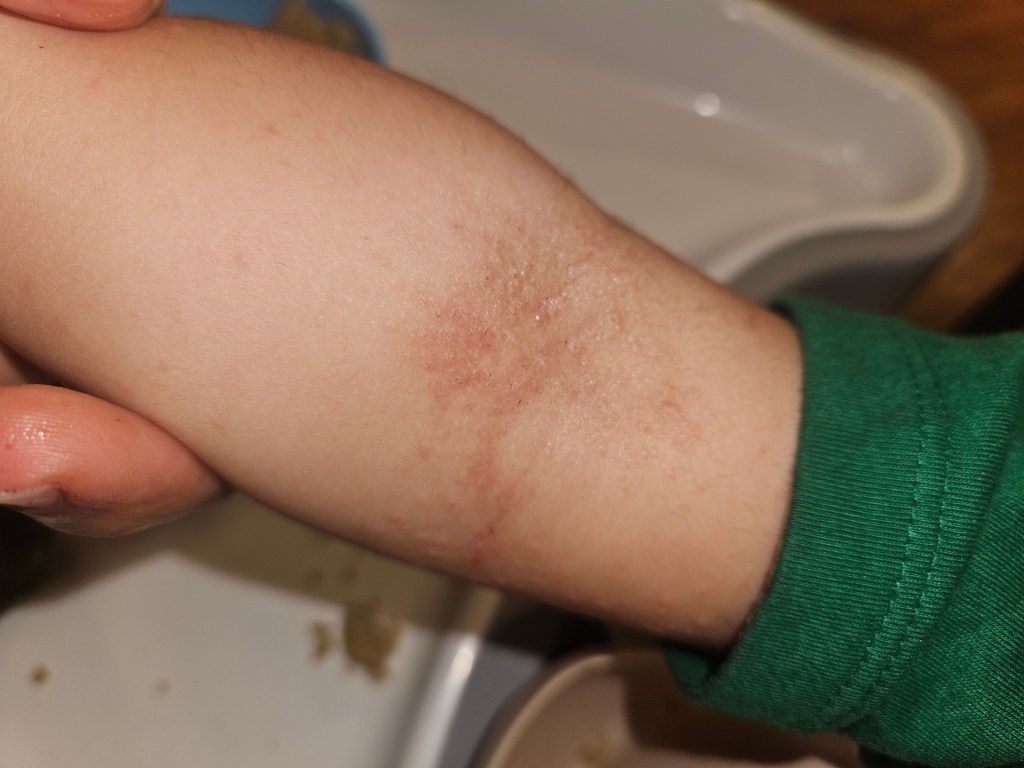
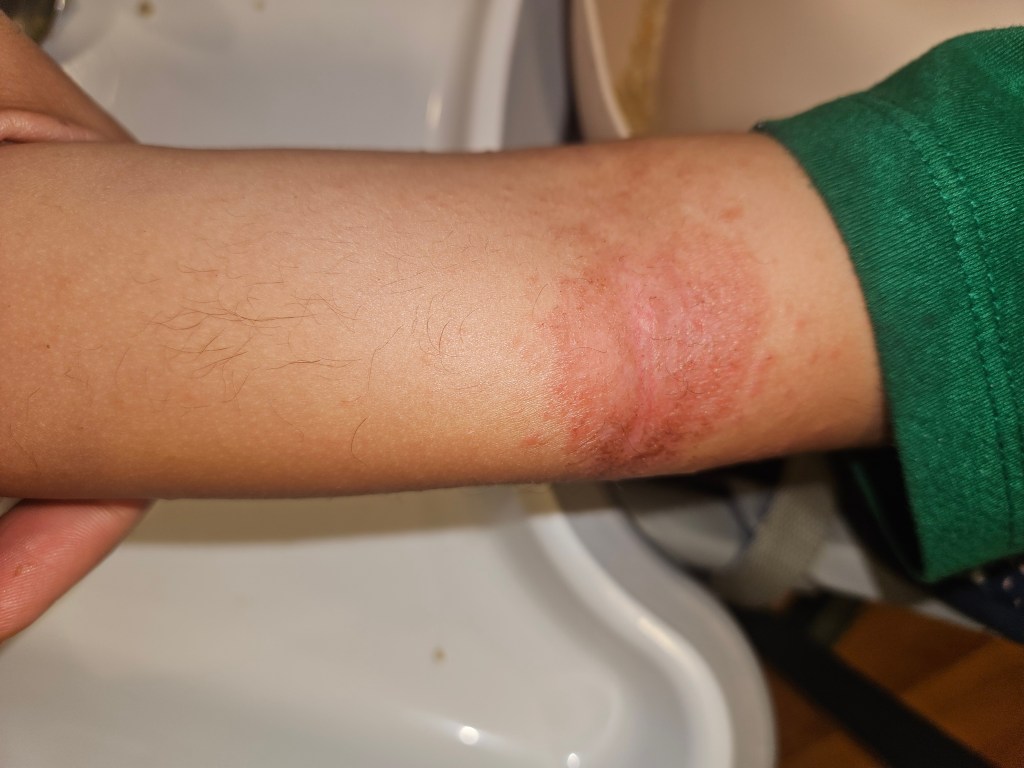
The constant scratching can cut through the skin resulting in bleeding or oozing of clear fluid. At this stage the rash is susceptible to becoming infected which will make things worse. This is why symptomatic relief is just as important as addressing the root cause. The symptomatic relief will ease the itchiness to prevent the scratching that causes the secondary lesions. However, symptomatic relief will not address the root cause which is an environmental irritant, or, in the case of atopic dermatitis, an over-reactive immune system.
Dermatitis Herpetiformis (of Celiac Disease)
We thought it would be prudent to include in this article a section on Dermatitis Herpetiformis which is a rash that develops in association with gluten-sensitivity a.k.a. Celiac Disease. This rash presents very similar to eczema with intensely itchy papules that can be distributed anywhere on the extensor surfaces of elbows (back), knees (front), back, buttocks, back of neck, and scalp. It commonly presents symmetrically (affects both right and left sides of body, i.e. right and left. Because if the intense itchiness, when this person comes to complain the rash is already scratched through and developed into a thick plaque or peeling skin.
The interesting thing to note here is that persons with this type of rash may not have full-blown Celiac disease. They have what is called a “sub-clinical” form of gluten-sensitivity. In other words, they may have never been diagnosed with Celiac disease but if you do a biopsy of their small intestine you will see the characteristic inflammation pattern of Celiac disease. This type of rash may be treated by eliminating all gluten from their diet.
Western Medical Interventions
The first recommendation is to keep the skin well moisturized to prevent itchiness. This includes limiting baths to 1/day, lukewarm to mildly cold (not hot), and applying moisturizers to the skin immediately afterwards.
The pharmacologic treatment includes low- to mid-level topical corticosteroids (steroid creams/ointments for the skin).
Mid level examples include:
- betamethasone valerate 0.1%
- desoximetasone 0.05%
- Fluocinolone acetonide 0.025%
- fluticasone propionate 0.05%
- hydrocortisone butyrate 0.1%
- hydrocortisone probutate 0.1%
- hydrocortisone valerate 0.2%
- mometasone furoate 0.1%
- triamcinolone acetonide 0.025%
- triamcinolone acetonide 0.1%
Low-level examples include:
- alclometasone dipropionate 0.05%
- desonide 0.05%
- fluocinolone 0.01%
- hydrocortisone butyrate 0.1%
The low-level topicals are best used for areas of the body with thin skin such as the face or folds of the armpits, neck, or thighs. The reason for this is because steroids can cause the skin to thin over time so you want to use a lower strength topical in these sensitive areas.
Another word of caution which applies to both topical and especially oral steroids (pills by mouth) is that using steroids for a long period of time can lead to serious side effects and derangement of normal metabolic and hormonal processes. Oral steroids should not be used for more than a week, except in severe cases where the benefit outweighs the cost.
In the case of using topical steroid creams over long periods of time, the local side effects (effects on the site of skin only) are much more common than systemic side effects (effects on the whole body system). Local side effects include: thinning of the skin, purpura (bruising), acne, striae (stretchmarks), or tachyphylaxis (tolerance to steroid and re-occurrence of rash). Most doctors would say that there is no worry for systemic side effects as long as you use low level steroid creams and avoid thin skin areas.
Nonetheless, if you use high-level steroid creams on sensitive skin areas you can easily induce systemic side effects. Use any level cream with caution if you are going to use them for more than one month, and be mindful as to how much of the body area you are applying it to.
Because of the potential dangers of long term steroid use, we strongly advise to seek the root cause of the eczema to cure the disease for good. The corporate medical institutions will tell you “there is no cure for eczema.” However, we all know they have a cash incentive to say that.
Natural Medicine Perspective
Eczema – particularly atopic dermatitis where the main issue is an over-reactive immune system – can be described as a condition that is generally hot and dry. This is why we advise to avoid hot showers or baths or any foods that heat up the body. People with an already hot temperament must especially heed this advice.
The most beneficial, long-term intervention for anyone that suffers from atopy (eczema, allergies, asthma) is to take cold showers EVERY SINGLE DAY. You can start at 1 minute/day but you want to slowly build up your exposure time to 5 minutes/day. For children, this may seem especially cruel, they will generally scream and cry the first couple of times. Slowly build up their tolerance, turn it into a fun game, join in with them, and they will get accustomed. Habituating a child to this practice is not only good for atopy but overall good for their health and physiology. Their body will thank you later.
Be aware of gluten sensitivities as this may be a trigger, even when there is no full blown Celiac disease known of. This is where elimination diets come into play. Keep a diary of the food being eaten and note any sources of gluten. Then cut out all gluten containing products for at least a month or longer to see what happens. If your child struggles with this, get creative. They like pasta with tomato sauce? Switch to scrambled eggs with quinoa and add tomato sauce to that. Better yet, switch to a gluten-free pasta made from certain grains or legumes.
If elimination of gluten for at least a month does not work. Consider other potential culprits. Excessive sugar intake is a big one since processed sugar can ramp up an already over-reactive immune system and cause more allergic reactions. Consider poorly processed vegetable oils used in your cooking process also as these may be a contributor to inflammation.
For an atopic person who has established allergies to things such as cat or dog dander, avoid these as much as you can since the exposure to these triggers can flare up the eczema too. In these situations where exposure has already happened, clean the exposure site with soap and water immediately. In this case, I do advise one dose of child’s Benadryl, even though pharmacologic drugs are not my go-to; especially since most child’s Benadryl has harmful chemical dyes as “inactive” ingredients.
Plant Medicine Interventions
The great herbalist Maurice Mességué was renown for using herbal foot-baths and poultices for treating all manner of both local and systemic disease. I love this approach since it is very safe and surprisingly effective. Some people may not realize that plants can cause a lot of harm too, so please use them with care and caution, especially in children. This foot bath approach is based on the knowledge that the hands and feet serve as energetic portals to the systems of the body. This approach is most effective when one is using fresh, or at least, recently dried herbs that still contain most of their vital essence.
In his autobiography ‘Of People and Plants’ he describes treating an alcoholic denizen of the streets of Paris who had an extremely severe case of eczema that was resistant to all forms of treatment.
He describes his thoughtful approach as such:
“I decided to focus my treatment on his liver and bowels, to rid them of all poisons; his kidneys, to stimulate them to eliminate the toxins in his body; his nerves, to subdue the itching; and his skin, to treat the scaly patches of eczema”.
This multifaceted approach is beautiful and precise. This brings up the point made earlier in this article, that adults with eczema usually have some sort of toxic accumulation from poor diet or lifestyle habits. Therefore, in these cases it is prudent to facilitate the elimination of these toxins by opening up the portals of the liver, kidney, and lymphatics. He continues:
“For his liver I relied mainly on the artichoke, not using the flower, which is the edible part, but the unusual and beautiful grey leaves…Country dwellers used to treat jaundice most successfully with the roots of ‘artichoke’. It helps to promote the flow of bile, the elimination of water, and of urea in the blood. As it will also cure certain skin infections of hepatic origin…I supplemented it with milfoil, cabbage leaf and thyme.”
“For his intestines I chose the charming, humble white hedge bindweed…an excellent purgative.”
“For…nerves I chose linden blossoms and single seed hawthorn…It is one of the best anti-spasmodics in existence, having none of the toxic effects of those chemical tranquilizers so freely indulged in today.”
“As a diuretic I used common broom…and the flowers of meadow-sweet and the roots of couch-grass.”
“Lastly to treat the skin condition itself, I chose sage flowers and the leaf of great burdock…This plant is considered one of the specific remedies for scaly and impetiginous eczema.”
Mixing all these herbs together, he used them as a foot-bath, 2x/day for 1 whole month. By the end of that month he reported the eczema was completely cured. This “miraculous” cure, witnessed by sisters of the local convent, is what kickstarted this humble herbalist career to reach great fame through the mid 20th century.
More On Burdock (Arctium lappa)
As mentioned above, Burdock is a specific remedy for eczema. This is also cited by Andrew Chevallier in ‘Herbal Remedies Handbook’
“Traditionally combined with dandelion to make a tonic, cleansing drink, is an important detox remedy in both Western and Chinese herbal traditions. Often used to treat skin problems, burdock also supports the immune system during infection and chronic illness. May be used in any situation in which the body needs increased clearance of waste products. Conditions as varied as acne, boils, eczema, arthritis, fibromyalgia, and tonsillitis will benefit from the herbs ability to stimulate release of waste products from cells.”
Here we see again the theme of waste product elimination in the treatment of eczema.
“However, it should be used with caution as even small amounts can cause an initial flare-up in symptoms, particularly in skin disorders.”
From my own experience, detox can sometimes be accompanied by a skin reaction. This may be due to release of toxic chemicals through the pores of the skin. Maybe this process can be facilitated by accompanying the herbal intervention with a sweat lodge session? The plant moves it out to the surface of the skin, and the sweat pushes it out all the way so it doesn’t just sit there and get stuck in the pores.
“For this reason, it is rarely used on its own and is combined with remedies such as dandelion (Taraxacum officinale), red clover (Trifolium pratense), and yellow dock (Rumex crispus) that counterbalance its detoxifying action. Burdock root is also thought to have antidiabetic and cancer preventative activity.”
I don’t know what he means by “counterbalancing detoxifying action” as these other plants also act as detoxifying agents. It is probably related to some sort of energetic balancing and dilution of the burdock itself.
Of note, that Andrew Chevallier specifically mentions using the seeds or root. The routes of administration cited in his section on burdock are decoction, tincture, and tablet. It is possible that these more aggressive routes of administration, in contrast to foot-baths, are responsible for causing the initial flare-up in symptoms.
In her book, ‘The Lost Book of Herbal Remedies’, Nicole Apelian has a section on Greater Burdock (Arctium lappa) in which she mentions other common names for this plant which include: edible burdock, lappa, beggar’s buttons, thorny burr, and happy major.
The cited list of medicinal effects are:
- Detoxing and Liver Cleanser: “Its root is particularly good at helping eliminate heavy metals and other resilient toxins from the body. It helps with conditions caused by a overload of toxins, such as sore throat and other infections, boils, rashes, and other skin problems
- Cancer Treatment: “…used to treat breast cancers, colon cancer, and even the deadly pancreatic cancer with good results.”
- Anemia: “…high concentration of bioavailable iron.”
- Skin Diseases: “…a very soothing herb for the skin. It has mucilaginous properties that enhance its ability to cure skin diseases such as herpes, eczema, psoriasis, acne, impetigo, ringworm, boils, insect bites, burns, and bruises. Use greater burdock tea as a wash and take it internally to clear the body of the toxins that are causing the skin problems. For bruises, burns, and sores, crush the seeds and use as a poultice on affected skin.”
- Diabetes: “For this use the fresh root is best, but 1 to 2 grams of dried powdered root can also be taken 3 times daily.”
- Strengthens the Immune System and Protects Organs: “…protects the spleen and helps it remove dangerous pathogens from the body.”
- Stimulates the Kidneys: “…flushes waste toxins from the body…a natural diuretic.”
- Osteoarthritis and Degenerative Joint Disease: “Patients show remarkable improvement when they consume three cups…daily…improvement is slow and steady, taking about two months to achieve maximum benefits.”
- Sore Throats and Tonsillitis: “…relieves pain, inflammation, coughing, and speeds healing…also acts as antibacterial to kill the harmful bacteria and cure the infection.”
Other Considerations and Mentionable Plants
In the book, ‘The Complete Family Guide To Natural Home Remedies,’ there is a good point stated that eczema may be heavily related to stress. I can see this functioning as an overactive nervous system with frayed ends that irritate the skin. It may be more common in adults or in children living in very stressful environments.
Some mentionable plants and interventions include:
- Aloe vera applied directly to the skin
- Chickweed ointment
- German chamomile cream, oil, or bath
- Cucumber juice and cabbage poultice
- Oatmeal bath
- Sesame oil
- Apricot kernel oil
- Wearing cotton clothing
- Using soap powders without stain digesters
- A few drops of vinegar in a bath
Special Mention: Mimosa tenuiflora Salve
I once worked with a patient that was diagnosed with a rare skin condition called Hailey-Hailey disease. She had excoriations and blisters all over her body, especially in folded areas.
I had never heard of it at the time and had to do some research.
I learned that it was caused by a genetic mutation that caused the linkage between surface skin cells to break down. As I was talking to her about it, I had a sudden thought drop into my head.
‘She needs an astringent herb, something with a high concentration of tannins to cross-link the skin cells back together again, I think I may have something for her.’
I asked if she would be willing to try something experimental. She said she was willing to try anything at this point, so I went down to the lab and got cooking.
I took some Mimosa tenuiflora root bark, powdered it down, then infused it into some coconut oil. I then mixed the infused oil with beeswax to make a stable salve. I gave her a few jars and told her to let me know how it worked.
She calls me a week later, ecstatic. She tells me that all her blisters are going away and the old scars are healing too. I was just as amazed as she was.
I did some more research on the plant to get a better idea of its full molecular profile. It is high in natural steroids such as campesterol, stigmasterol, along with triterpenoid saponins, serotonin, and other indole alkaloids. Many of these molecules have been found to have immunomodulating properties, anti-cancer properties, and magnificent skin-healing properties.
I went on to find out that this plant was used by Aztec women to remain young and beautiful.
I though to myself. This may work for eczema also.
Contrary to pharmaceutical steroids, these are a family of many molecules, steroids and non-steroids, that work together to balance each other.
I put it to work, and sure enough, my young daughter responded to it very well. I applied it three times a day on affected areas and the itchiness reduced, the redness went away within one day. The rash began to heal within four days of using it. We are currently on day five.
I am documenting the progress and will upload photos as proof. I will also make this salve available for purchase in our botanical shop. Stay Posted.
Update: 1/28/25
Tenuiflora Salve Results
The Tenuiflora salve did not work as good as I would have liked it to. There was an initial relief of symptoms and skin healing. However, by day 6 the skin around open lesions became noticeably thin and withdrawal of the treatment for one day resulted in an aggressive return of symptoms. The Tenuiflora salve looks to me to work similar to a potent steroid topical and should be reserved for extreme situations for a short period of time.
In lieu of the Tenuiflora salve I began using Shea Butter. Organic Raw African Shea Butter. It worked lovely. I used it three times a day with a dramatic relief in symptoms, reduced scratching, less redness, and better quality of sleep.
This has all been for symptom relief which is important but I am still dedicated to achieving a total remission, a.k.a. cure. Towards this I have continued putting my eye towards the relationship between the gut microbiome, the skin microbiome, and eczema. Related to this is a hypothesis I have devised that may hold some answers as to the cause of eczema and many other diseases of modern society.
New Hypothesis
A recent class I was teaching had a case where a nine-year old girl presented with a cold abscess, a patch of eczema, and history of multiple fractures. She was found to have Job Syndrome (AD-HIES), a type of primary immunodeficiency. When reading into the literature about the pathophysiology of eczema in immunodeficiency I came across some interesting things.
The T-cell component of the immune system can be grossly divided into two main responses. Th1 and Th2 response. The Th1 response is mostly used to combat bacteria whereas the Th2 response is used to combat parasites. In this syndrome, Job Syndrome, affected individuals have an overactive Th2 response which causes them to have eczematous reactions on their skin to simple bacteria. This shows me how eczema itself may be the result of an unbalanced immune system response. Furthermore, and more interesting, is that the Th2 response is associated with parasites and this same reaction can manifest as eczema.
There has been a lot of talk on the internet recently about parasites and about how modern medicine has effectively eliminated parasitology from consideration much to the detriment of public health. I would concur with this, during my medical school curriculum I had only one lecture about parasites and the lecture was given with the context of “this only happens in third-world countries.” That is odd, because tapeworms are a thing of first world countries and pinworms are a very common parasite infection in children of first-world countries also. Are we to believe that these are the only two parasites that invade our body in the industrialized world? Furthermore, yes we live in first world countries, but much of our food and products originates or is processed in third world countries. I am coming to believe that parasitology is an untapped gold mine for disease cause and cure.
Related to eczema, my hypothesis is thus:
A parasite infection internal to the body is causing over-activity of the Th2 immune response which results in an eczematous reaction on the skin to normal flora.
How can I prove this? Time will tell with experiments run and people to talk to. Time for a dep dive into parasitology.
Successful Eczema Treatment (90% symptom reduction)
In other news is progress on the front of the eczema rash. We cut out gluten completely from my daughter’s diet and greatly minimized processed sugar. These are the latest photos of her rash with before and after comparisons.
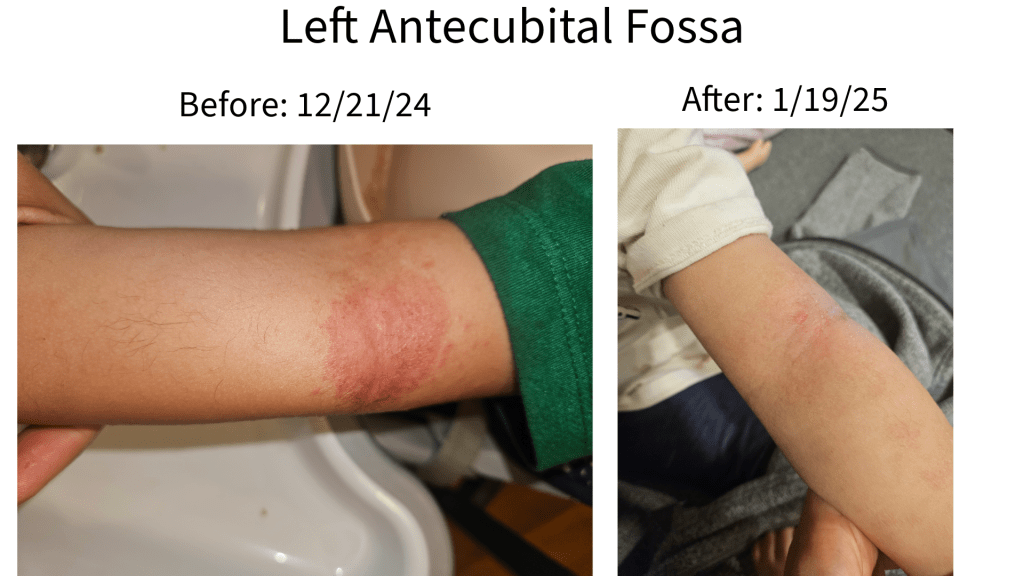
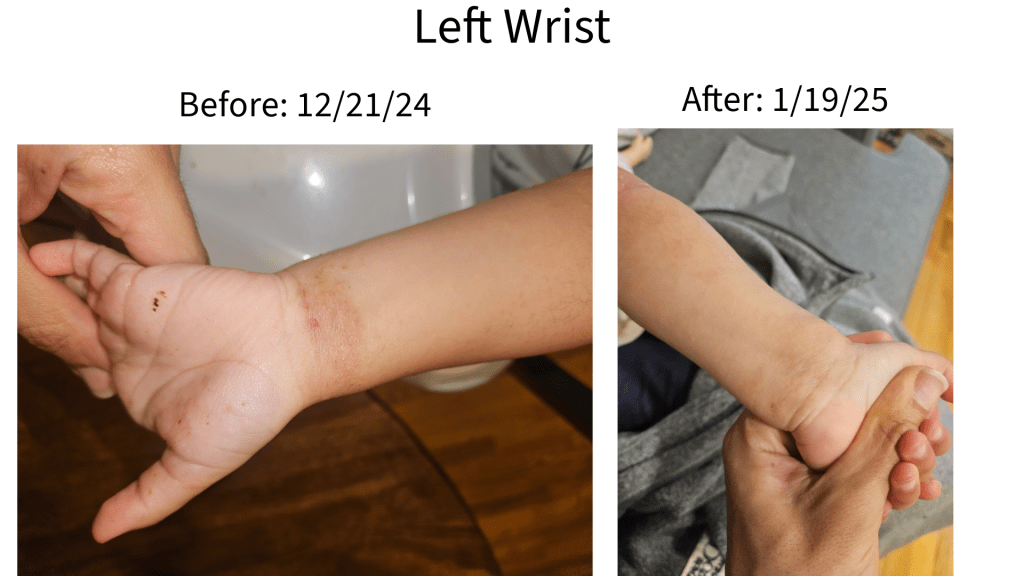
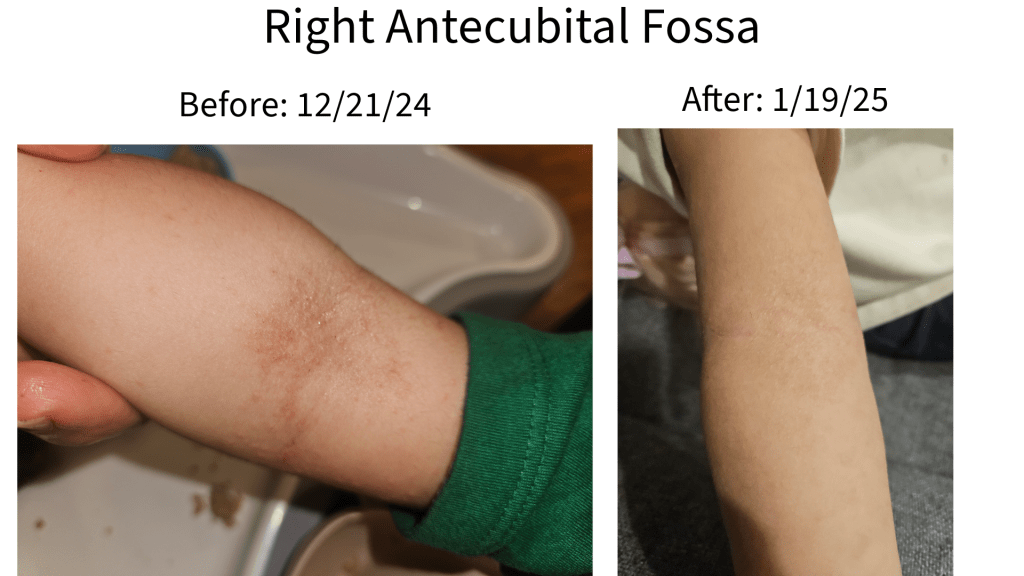
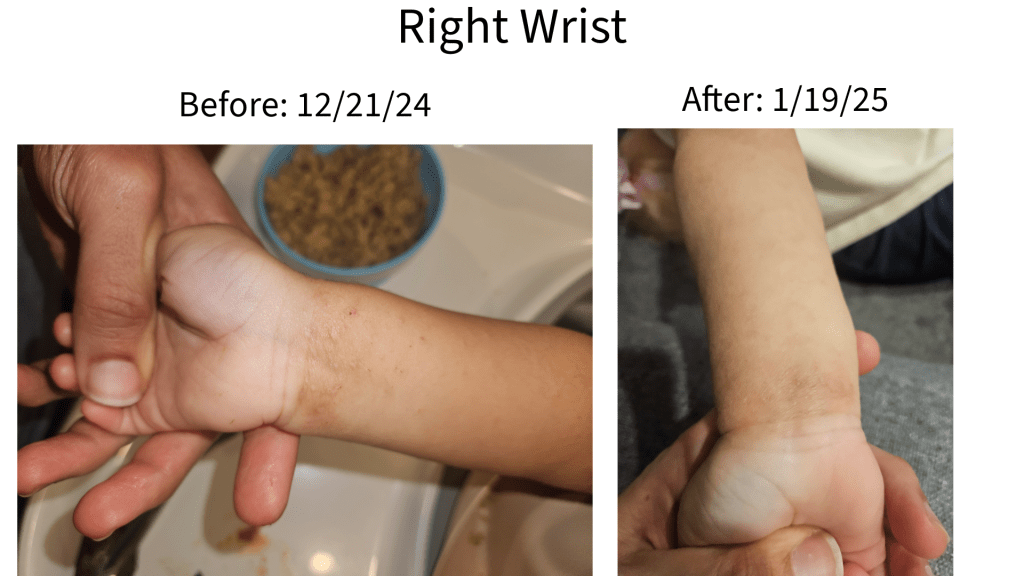
As you can see, the results are quite dramatic. This was over a 4 week period. This is how these results were obtained:
- Apply raw aloe vera gel directly to the skin twice per day, once in morning after wake up and once at night after bath. Let aloe dry off the skin on its own before applying the next medicine. The aloe helps repair damaged skin from scratching.
- Apply raw shea butter directly to the skin 2-3 times per day. Apply it very generously in the morning after wake-up, night time after bath, and a third time in the middle of the day if you find them scratching. This will help relieve redness, itchiness, and maintains skin well hydrated.
- Eliminate all gluten products from diet. The main source of her gluten was bread and pasta, she loovveess bread. We switched to a gluten free bread and almond flour tortillas and replaced all pasta with rice. If switching to gluten free products is outside of your budget then just eliminate all bread, pasta, and cereal whatsoever. Look for alternatives that your child may enjoy such as rice, scrambled eggs, etc.
- Eliminate or at the very least, severely reduce processed sugars. People like to give kids sweets, I don’t know why, it’s extremely bad for them but I guess this is how people get little kids to like them. Cut that out. Processed refined white sugar is one of the worst things you can give to a human and even worse to a child. It damages the liver, immune system, and nervous system over time and even worse when you give it to a child it retrains their taste buds for sugary things only. It makes it much more difficult to give them a wide array of foods after they have become accustomed to intense sweetness. This is why so many young kids, teenagers, and even adults have maladaptive eating patterns. Cutting out sugar will severely reduce the inflammation of the rash and more importantly stops feeding the bad bacteria in your gut.
- The final and most clutch intervention. Introducing fermented foods at least once a day. I gave my daughter a spoonful of kimchi juice every morning before breakfast. This helps reconstruct the gut microbiome to the more beneficial bacteria. If you do not have kimchi on hand or it is hard to obtain for you, you can do the same with a tablespoon of apple cider vinegar or other fermented foods.
Don’t let anyone tell you that eczema is incurable. I don’t believe I have achieved a full cure for her yet. If I give her gluten or processed sugar for one day her rash comes back immediately the next day. I want her to be able to enjoy a nice dessert meal at least once in a while without worrying about breaking out into a rash. Who knows, maybe this is Nature’s way of telling her that she is better off without the sweets. Nonetheless, the rash is reduced by about 90% but not fully gone and there are still times she gets itchy if I miss a shea butter treatment. I think the full cure may lie in the question of parasites.
I will do some more research and experimenting to come back with results. Stay Tuned.
References:
- Lawley LP, McCall CO, Lawley TJ. Eczema, Psoriasis, Cutaneous Infections, Acne, and Other Common Skin Disorders. Harrison’s Principles of Internal Medicine 19th ed. 2015: 344-352.
- Lazar AJF, Murphy GF. Acute Inflammatory Dermatoses. Robbins and Cotran Pathologic Basis of Disease 9th ed. 2015: 1162-1165.
- Gabros S, Nessel TA, Zito PM. Topical Corticosteroids. National Library of Medicine Stat Pearls. 2023. https://www.ncbi.nlm.nih.gov/books/NBK532940/
- Mességué M. I Pay My First Patient. Of People and Plants. 1991: 54-59.
- Chevallier A. Burdock (Arctium lappa). Herbal Remedies Handbook. 2021: 72.
- Nicole A. Greater Burdock, Arctium lappa. The Lost Book of Herbal Remedies. 2021. 83-85.
- Sullivan K, Shealy CN. Skin and Hair. The Complete Family Guide To Natural Home Remedies. 1997. 73.
 The Medicine Way